

Bia is your step-by-step guide to overcoming phobia and taking your life back.
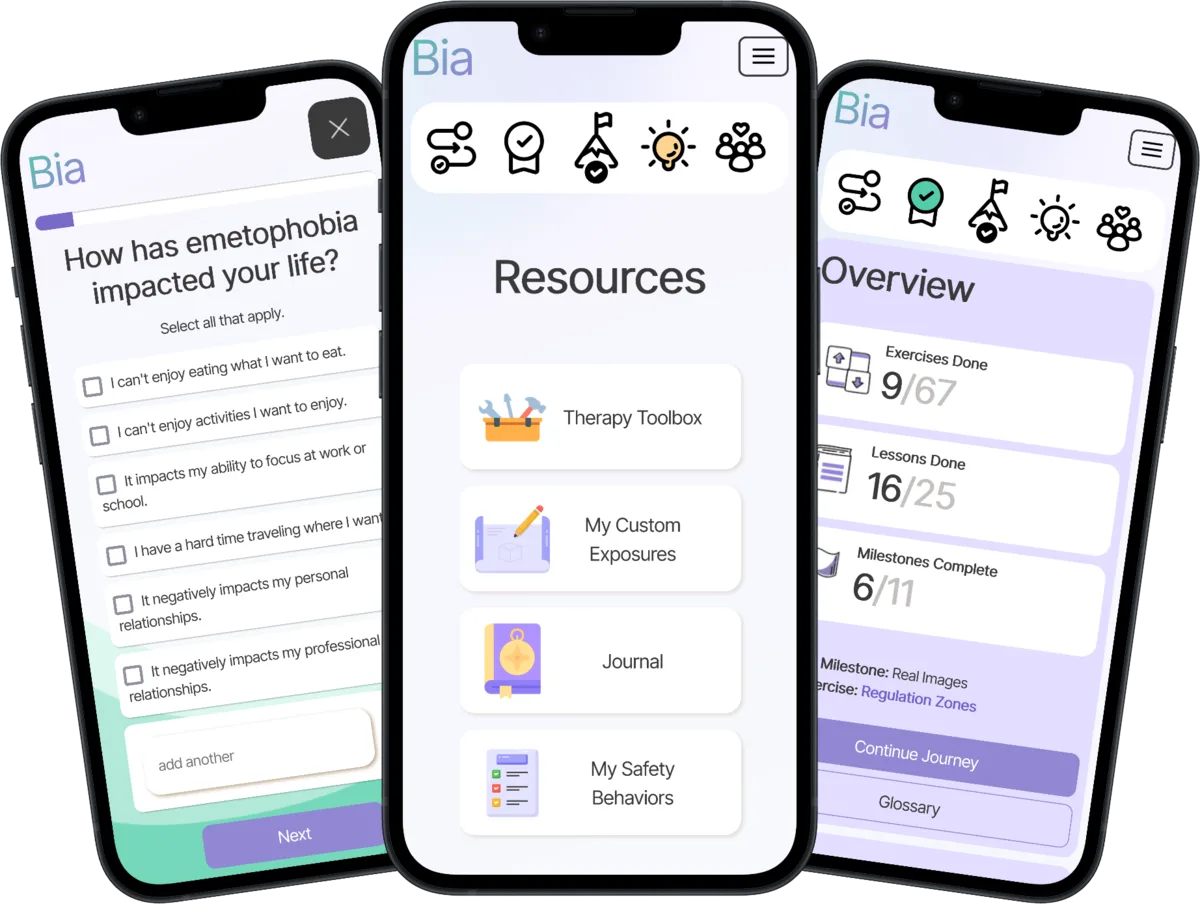
Based on researched techniques, get started in just a few minutes, learn new skills, and track your progress.
How social anxiety shaped what Bia is today
Social anxiety responds especially well to behavioral experiments: dropping a safety behavior, seeing what actually happens, updating the belief. Bia structures the social-exposure ladder so the experiments are small enough to do but real enough to count. We added social anxiety because the same clinical engine that works for specific phobias works for the fear of being evaluated.

This photo was my first time ever on a boat, something I had avoided for over 27 years. I loved it.
I Believe You Can Recover
Hello, my name is Willy, founder of Bia. I suffered from emetophobia for most of my life and know first hand the misery and loneliness it can cause. During my recovery I built a tool to track my progress and help me practice. Over four years this tool transformed into Bia, now used by people around the world. I'm happy to share I have recovered from phobia and I believe you can too.
The same engine that works for phobia works for social anxiety: exposure, paced, structured, daily. It isn't in big leaps; it's in showing up for the small ones repeatedly. Bia gives you the ladder.
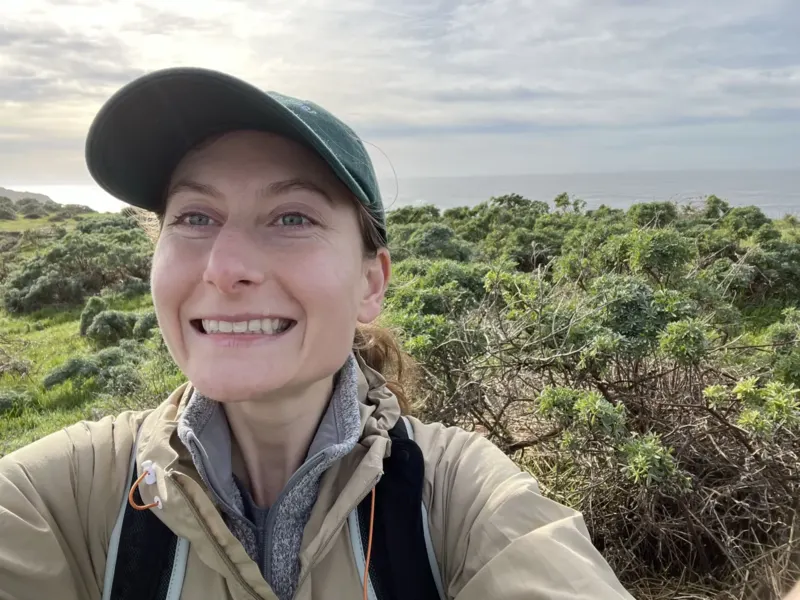
Enjoying my first trip to Hawaii, a place I always wanted to go but never thought I'd be able to get to.
From Bia User to Co-Founder
My name is Elizabeth, and I am Co-Founder of Bia. I came across an early version of Bia while working through my own phobia recovery and became one of its first users. I was already seeing a therapist, but once I added daily guided-exposure practice with Bia the impact on my recovery was immediate. I've since partnered with Willy to leverage my health-care background to build and expand Bia, and it's been incredibly meaningful to see the tool help others just as it helped me.
How it Works
How it Works
01
Learn the how and why of your phobia. Your phobia is not your fault.
02
Personalize your journey and set your goals.
03
Learn researched techniques for overcoming social anxiety.
04
Practice new skills in a safe environment.
05
Track your progress on lessons, exercises, and major milestones.
06
No tricks, traps, or surprises of any kind.
Partners and Conferences
Bia is built in collaboration with leading academic researchers and found at national clinical conferences.


 ADAA 2026 Symposium Presentation
 NASP 2026 Miniskills Presentation
A Team of Experts
Licensed psychologists, clinical counselors, and research scientists. Decades of treatment experience across all age groups.


Ready to start?
Choose your path to recovery
 +
+


Frequently Asked Questions
Is it possible to overcome social anxiety?
Yes. Research shows, recovery from phobia is possible. You don't have to settle for life with phobia.
What does it mean to overcome a phobia?
Imagine a life where phobia does not influence your decisions. Where you can go where you want, eat what you want, and do what you want without anxiety, or fear.
Can I use Bia by myself?
Yes. Bia is designed to work as a self-guided tool. It provides a personalized recovery plan, interactive lessons, and step-by-step guided exercises for practicing evidence-based recovery techniques.
Can I use Bia with a therapist?
Yes. Bia works great along side therapy. Your therapist can use our provider portal to personalize your recovery plan, assign custom exercises, and monitor your progress.
We can help you connect with a therapist near you. Get Connected
I am nervous to try it.
We built Bia to lower the barrier to the path of recovery. Bia never tricks, traps, or forces you in any way. The journey is built of small, incremental steps. You control the pace and order of your journey.
How long does it take?
Individual sessions on Bia are short and take 5 to 15 minutes. Bia builds a personalized step-by-step journey based on your unique needs, so completing the full journey is different for everyone. Typically, a journey includes over 55 exercises and 19 lessons across 9 milestones.
How much does it cost?
Bia is free to try. A subscription is required to unlock your full journey. If you are using Bia with a therapist, you may be eligible to receive Bia for free as part of your treatment. Ask your therapist today.
If you have an HSA/FSA plan, you can use it to purchase Bia by first receiving a letter of medical necessity from our partner, Flex. Use HSA/FSA
Will I have to do public speaking?
Only if and when you choose. Bia's exposures start small: speaking up once in a meeting, calling instead of texting, attending one event. Public speaking is for those who want to go there.
Is shyness the same as social anxiety?
No. Shyness is a temperament. Social anxiety is a specific fear of negative evaluation that drives avoidance and safety behaviors. If shyness is dictating your decisions, it might be social anxiety.
What if I'm anxious because I actually am socially awkward?
Social skills are learned through social contact. Avoidance keeps both the anxiety and the awkwardness in place. Bia includes both exposure work and practical scripts for common situations.
Is Bia a replacement for therapy?
No. Bia is a personalized guided tool for learning about and practicing exposure. It can be used with, or without, the aide of a therapist, but Bia does not replace the use of a traditional therapist.
Other resources.
Here are some other resources that might be helpful:
Need help or want to get in touch?