EmetophobiaWhat Bia gives you
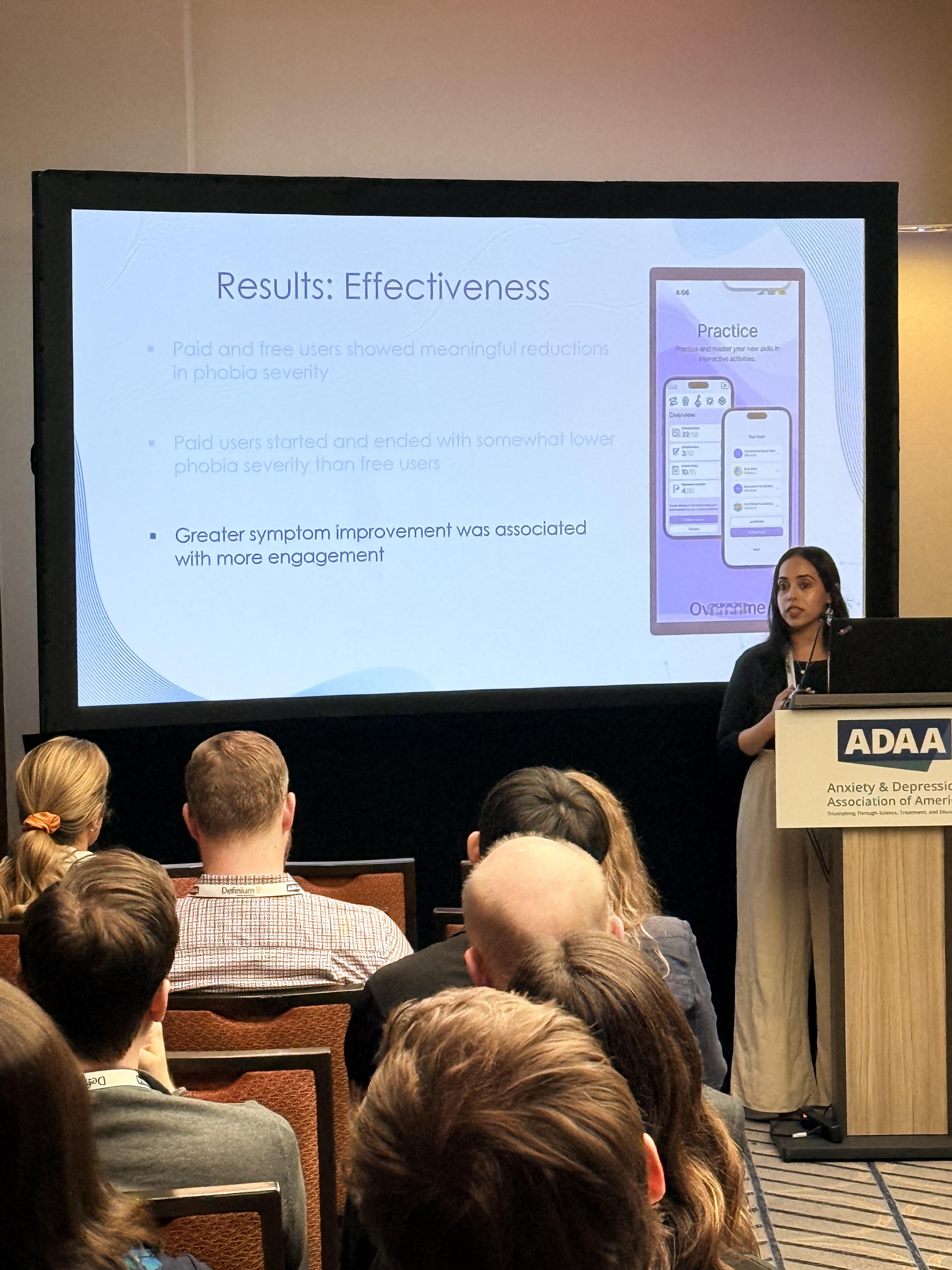
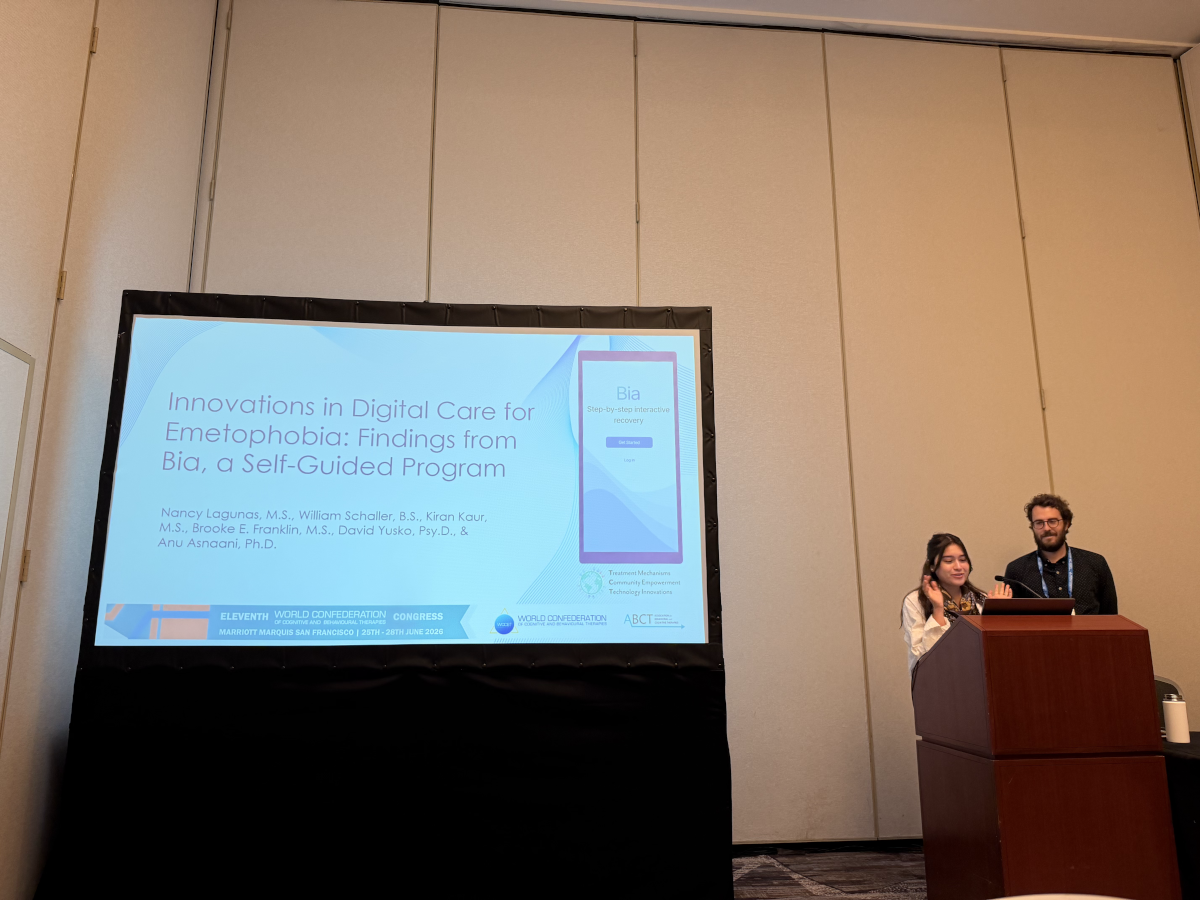
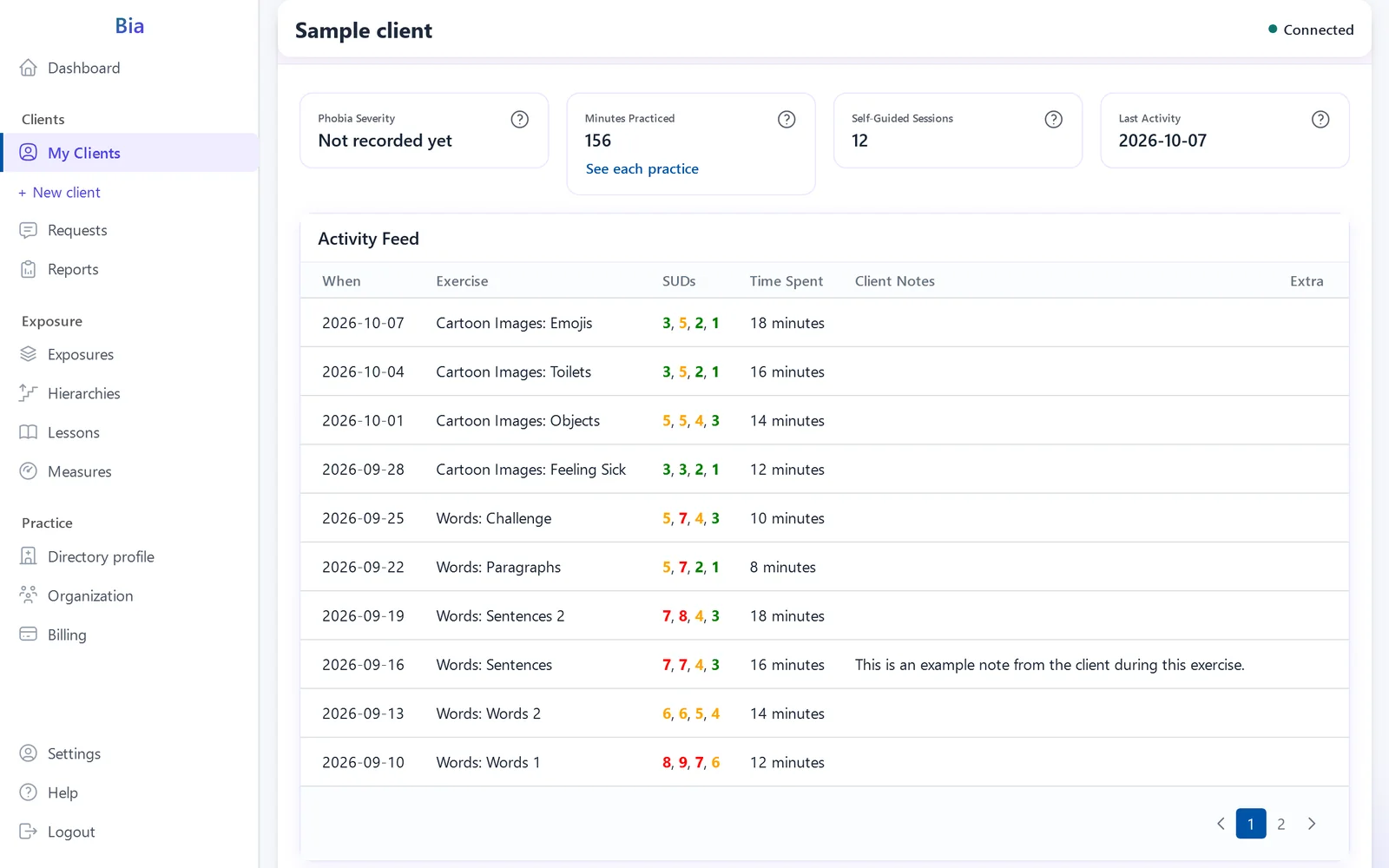
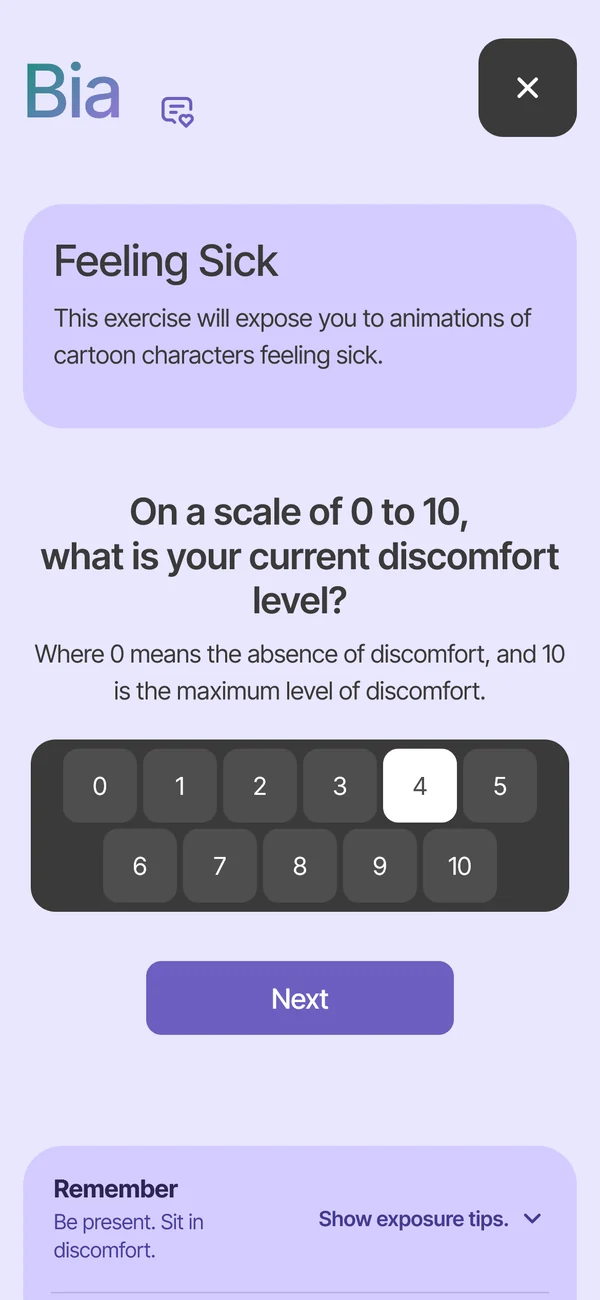
For emetophobia, Bia provides a graduated vomit-related exposure hierarchy (words, then images, then interoceptive nausea induction) you can assign, monitor, and adapt between sessions. Built-in response-prevention tracking gives you visibility into which avoidance and checking behaviors the client is dropping. SMSP-A is captured weekly so you can show measurable severity change at every session.
AgoraphobiaWhat Bia gives you
For agoraphobia, Bia builds the expanding-circles in-vivo exposure plan from wherever the client's safe zone currently sits, with safety-behavior reduction baked into each step. You see the ladder, you adjust step difficulty between sessions, and the client logs distress before, during, and after each exposure. Continuity of care without weekly clinic-only execution.
PanicWhat Bia gives you
For panic disorder, Bia structures the interoceptive-exposure ladder (spinning, breath-holding, brief hyperventilation) into daily assignable sessions. Attack frequency and severity are tracked separately so you can see severity drop before frequency follows, the typical clinical pattern. Pair Bia with your between-session check-ins to keep exposure dosing on target.
Social anxietyWhat Bia gives you
For social anxiety, Bia structures behavioral experiments and graduated social exposures with safety-behavior tracking (rehearsal, eye contact, scripted phrases) so dropping them becomes visible and measurable. Post-event rumination work and cognitive restructuring exercises are assignable between sessions. The client comes to session with data, not just a narrative.
Contamination OCDWhat Bia gives you
For contamination OCD, Bia structures the ERP hierarchy with explicit response-prevention windows, ritual-frequency logging, and mental-ritual tracking. The clinical-discipline burden ERP demands is offloaded to the app between sessions; you focus the session on case conceptualization and resistance work. SMSP-A and Y-BOCS-style measures are captured longitudinally.
School refusalWhat Bia gives you
School refusal is often a result of anxiety. Bia helps you identify the root cause of the anxiety and builds a plan to address it in incremental steps. This includes things like academic performance (grades, tests, presentations), social anxiety, fears of illness, separation anxiety, and more.
Separation anxietyWhat Bia gives you
For separation anxiety, Bia helps you build step-by-step plan for growing your child's confidence. Sometimes doing this can be challenging, and it's hard to know the line between helpful and harmful. Bia guides you through this balance with personalized activities and tools.
Fear of flyingWhat Bia gives you
For fear of flying, Bia structures the full arc of air travel into assignable steps: check-in, security, boarding, the cabin, turbulence. Interoceptive exposure to motion and arousal sensations runs alongside imaginal and in-vivo work. Distress logging before, during, and after each step gives you clean data for the next exposure-planning conversation.
Fear of drivingWhat Bia gives you
For fear of driving, Bia structures the full arc of driving into assignable steps: familiar streets, traffic, highways, bridges, weather, and driving alone. In-vivo drives are planned and tracked on the exposure map, so you can see which routes a client has reclaimed between sessions.
Specific phobiasWhat Bia gives you
For specific phobias outside our standard programs, Bia adapts to the trigger you and the client define together. You build the hierarchy, assign the steps, monitor distress, and adjust between sessions. The same guided exposure algorithm behind our emetophobia and panic programs supports any specific phobia at the same level of structure.











 Dr. David Russ
 Dr. Laura Berssenbrugge
 Jaime Roche
 Jacob Reiter
 Kaitlyn Peters
 Nancy Lagunas
 Ira Hays