Why Bia?
Phobia
Health & Body
Emetophobia
Fear of vomiting or being sick
Contamination OCD
Intrusive fears of germs & contamination
Panic
Sudden intense episodes of fear
Situations & Environment
Agoraphobia
Fear of open spaces & leaving home
Fear of Flying
Fear of flying & air travel
Fear of Driving
Fear of driving & being behind the wheel
Social & Performance
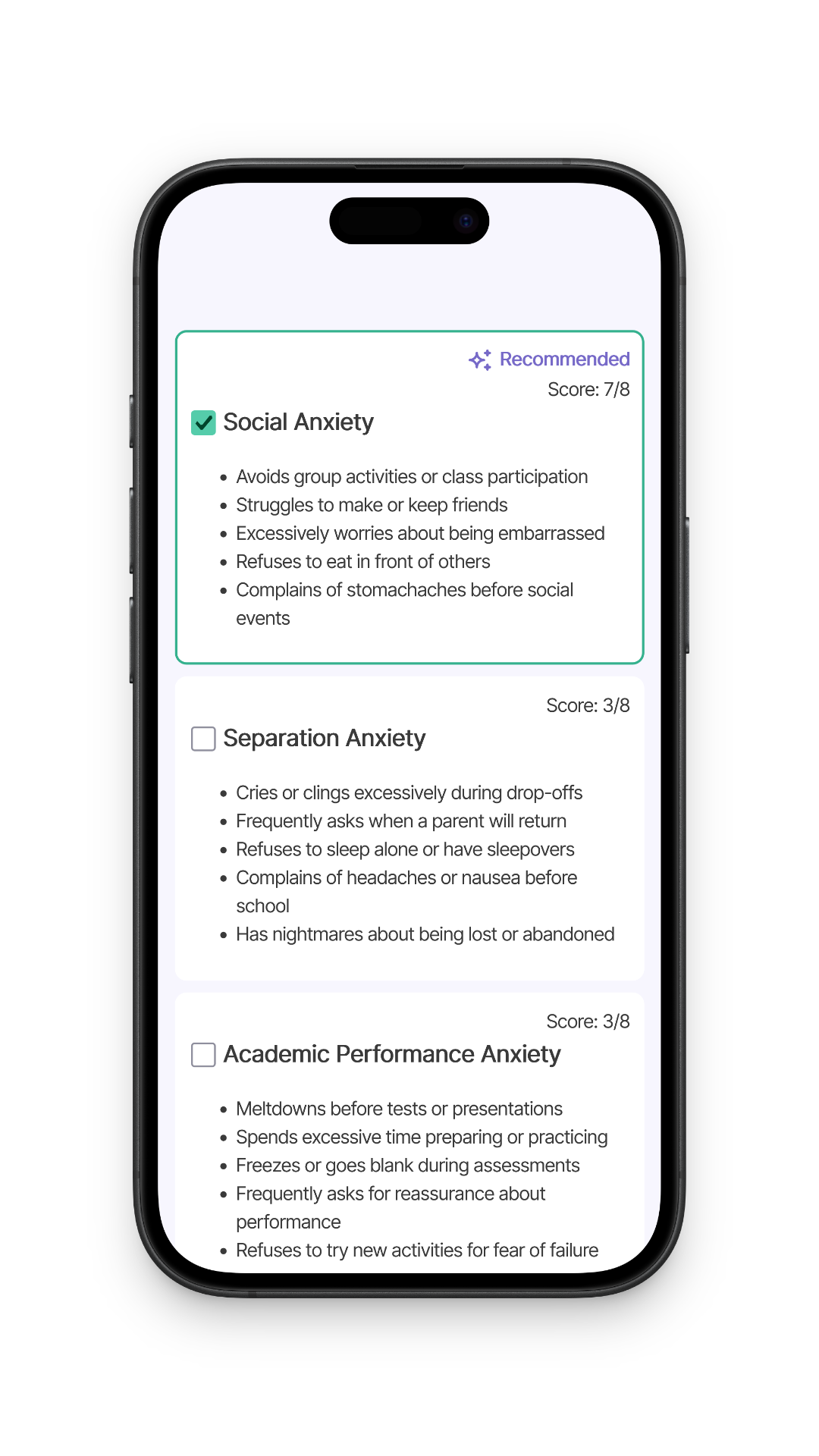
Social Anxiety
Fear of social situations & judgment
Children & School
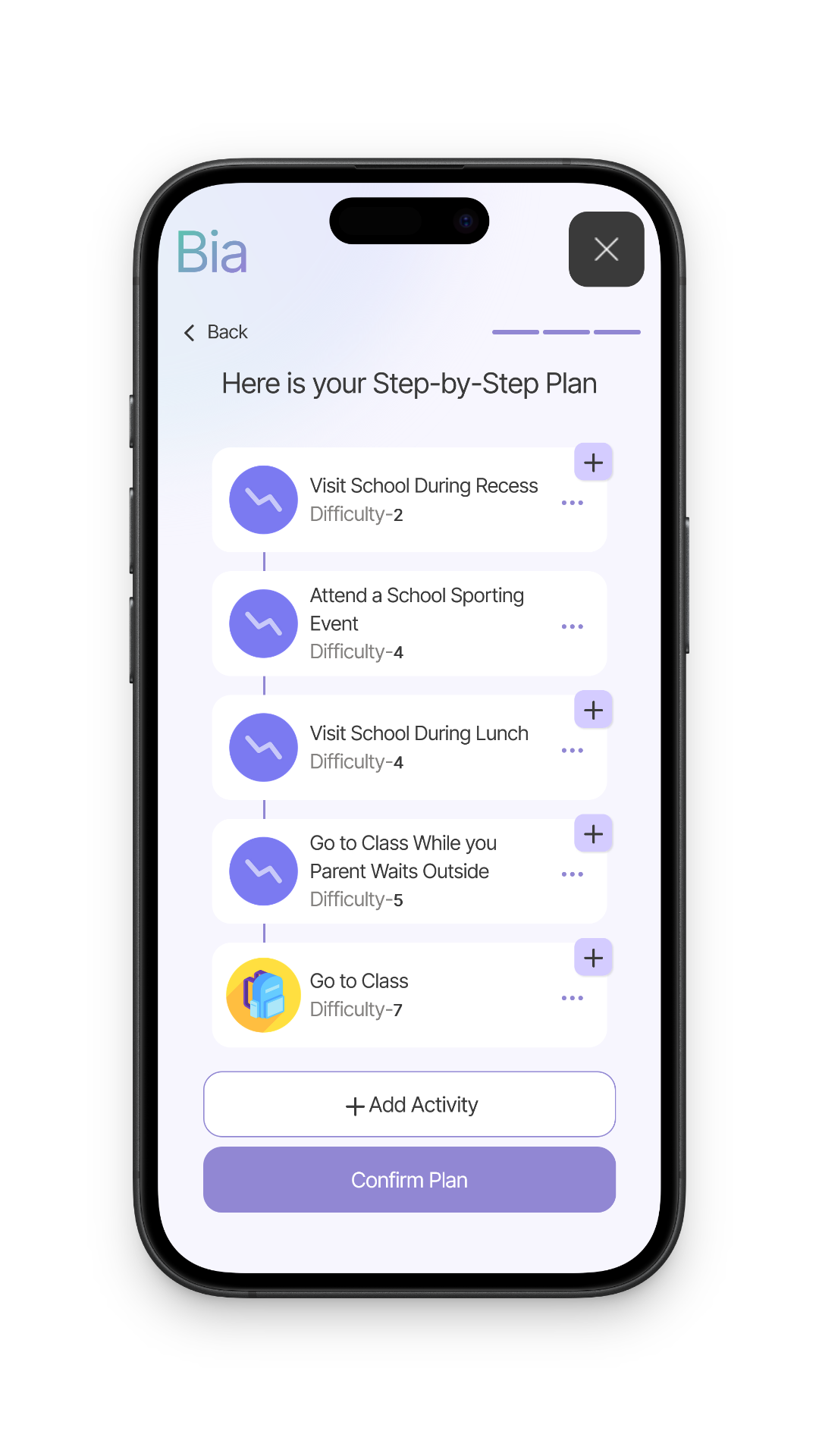
School Phobia
Struggling or refusing to attend school
Separation Anxiety
Fear of being apart from loved ones
School Performance Anxiety
Anxiety around grades, quizzes & tests
Help me find my condition
Not sure what it's called? Start here.
Something Else
Set your own goals & build a custom program
Resources
For Adults
Log in
Try for Free
Why Bia?
Phobia
Health & Body
Emetophobia
Fear of vomiting or being sick
Contamination OCD
Intrusive fears of germs & contamination
Panic
Sudden intense episodes of fear
Situations & Environment
Agoraphobia
Fear of open spaces & leaving home
Fear of Flying
Fear of flying & air travel
Fear of Driving
Fear of driving & being behind the wheel
Social & Performance
Social Anxiety
Fear of social situations & judgment
Children & School
School Phobia
Struggling or refusing to attend school
Separation Anxiety
Fear of being apart from loved ones
School Performance Anxiety
Anxiety around grades, quizzes & tests
Help me find my condition
Not sure what it's called? Start here.
Something Else
Set your own goals & build a custom program
Resources
Log in
Get Started
Start Your Journey
Create an account to save your progress.
Have an account? Log in
Forgot Password?
We never share your account data with third parties.
By creating an account, you agree to our
Terms of Service and Privacy Policy.
By creating an account, you agree to our
Terms of Service and Privacy Policy.
Forgot Password
Log in or Create an Account
Request another code.
Request another code.
or continue with
Send feedback
I built Bia after living with phobia for 27 years. I read every piece of feedback and work every day to make it better. Please feel free to share your thoughts, feedback, and suggestions anytime. Thank you for using Bia. I am wishing you the best on your recovery journey.
Willy, Founder and Fellow in Recovery
Thank you, your feedback was submitted. We read every message as soon as possible and use your feedback to make regular additions and improvements to Bia.
Need to talk to us about something? Contact Us