Bia - Bia - Inicio de sesión del proveedor
¿Tiene una cuenta? Iniciar sesión


Para terapeutas


Para los clientes

Portal de profesionales


Para terapeutas


Para los clientes

The exposure therapy platform that brings you clients.

Exposure therapy made easy with pre-built hierarchies, curated content, and clients that come to you.

Clients come to you while you are still building the practice.

Bia routes high-intent clients who are already exposure-curious to your directory. Even early in your specialty, the first session is therapeutic from minute one.

  • Free directory listing visible to thousands of weekly Bia visitors. Bonus badge after you have supported 3+ Bia clients.
  • Clients arrive having explored exposure work themselves, so first sessions are clinical, not introductory.
  • Coverage across phobias, OCD, social anxiety, and panic, for kids and adults.
  • Every intake waits for your review. Accept the clients that fit, on your timeline.

Fill a specialty practice without marketing it.

Exposure-ready clients find you through Bia. Their first appointment goes to clinical formulation, not psychoeducation on what exposure therapy is.

  • Free directory listing visible to thousands of weekly Bia visitors. Bonus badge after you have supported 3+ Bia clients.
  • Clients arrive having explored exposure work themselves, so first sessions are clinical, not introductory.
  • Coverage across phobias, OCD, social anxiety, and panic, for kids and adults.
  • Every intake waits for your review. Accept the clients that fit, on your timeline.

Run effective exposure without building hierarchies from scratch.

Validated content, pre-built hierarchies, and guided sessions that adapt to client distress in real time. Confident exposure on day one.

  • You set the hierarchy and parameters. Bia operates within them, you remain the treating clinician of record.
  • 1,000+ exposure exercises curated by psychologists, organized by condition.
  • Pre-built hierarchies for emetophobia, OCD, social anxiety, panic, and more.
  • Sessions auto-adjust pacing based on real-time SUD scoring.
  • Works alongside CBT, ACT, IFS. No forced workflow change.

Skip the prep. Spend session time on the therapy.

A library and hierarchy engine that saves the hours you spend assembling content. Use what fits, edit anything, build custom in minutes.

  • You set the hierarchy and parameters. Bia operates within them, you remain the treating clinician of record.
  • 1,000+ exposure exercises curated by psychologists, organized by condition.
  • Pre-built hierarchies as starting points, fully editable to your case formulation.
  • Real-time SUD pacing as a clinical assist, never a constraint.
  • Build and save custom exposures from the portal in minutes.

Clients return having actually done the homework.

Between-session work that tracks itself, plus adaptive pacing that prevents the over-exposure that scares clients out of treatment.

  • You set the thresholds and pacing rules. Bia operates within them, you remain the treating clinician of record.
  • Adaptive SUD pacing keeps every session in the window of tolerance.
  • Homework completion tracks automatically. No more "did you do your exposures?"
  • Hierarchies sequence easy-to-hard, so confidence builds before challenge.
  • SMSP-A, PHQ-9, and YBOCS curves give clients visible proof the work is paying off.

Keep clients in treatment past the difficult middle.

Adaptive pacing and between-session tracking attack the two biggest dropout drivers: over-exposure and homework non-adherence.

  • You set the thresholds and pacing rules. Bia operates within them, you remain the treating clinician of record.
  • Adaptive SUD pacing keeps every session in the window of tolerance.
  • Homework completion tracks automatically. No more "did you do your exposures?"
  • Hierarchies adjustable mid-treatment as the formulation evolves.
  • SMSP-A, PHQ-9, and YBOCS curves give clients visible proof the work is paying off.

Bill an extra $150/month per client. Without doing extra work.

Bia logs every session detail your billing pipeline needs for RTM. CPT 98975, 98976, and 98977, documented as you treat.

  • RTM reports generated automatically for CPT 98975 / 98976 / 98977.
  • Complete, timestamped audit trail for every session and client.
  • Insurance-ready PDF reports, paste into clinical notes or attach to your claim.
  • RTM access by invitation. Contact us to request.

Earn the reimbursement your specialty already deserves.

Specialist exposure qualifies for RTM billing. Bia produces the documentation as a byproduct of treatment, so the revenue is not gated on more paperwork.

  • RTM reports generated automatically for CPT 98975 / 98976 / 98977.
  • Complete, timestamped audit trail for every session and client.
  • Insurance-ready PDF reports, paste into clinical notes or attach to your claim.
  • RTM access by invitation. Contact us to request.
Crea tu cuenta de terapeuta
You remain the treating clinician of record.
Free to start. Provider plan from $29.99/mo. See full pricing
HIPAA compliant BAA included Try for free

How Bia connects clients to your practice

No cold-outbound, no marketing spend. Clients arrive in Bia for self-guided exposure, and the ones who want professional support find their way to your profile.

  1. 1

    They start self-guided

    Bia's patient app is a free, structured starting point for exposure. Clients build a hierarchy, run sessions on their own, and track their SUD curves before they ever talk to a therapist.

  2. 2

    They look for a clinician

    When self-guided isn't enough, the app routes them to the directory and filters profiles to licensed clinicians in their state who treat their condition. They already understand what exposure is and what they need help with.

  3. 3

    They book a call with you

    From your profile, they request an intake call in one tap. It lands in your dashboard as a new intake for you to accept, decline, or follow up on, on your own timeline.

Socios y conferencias

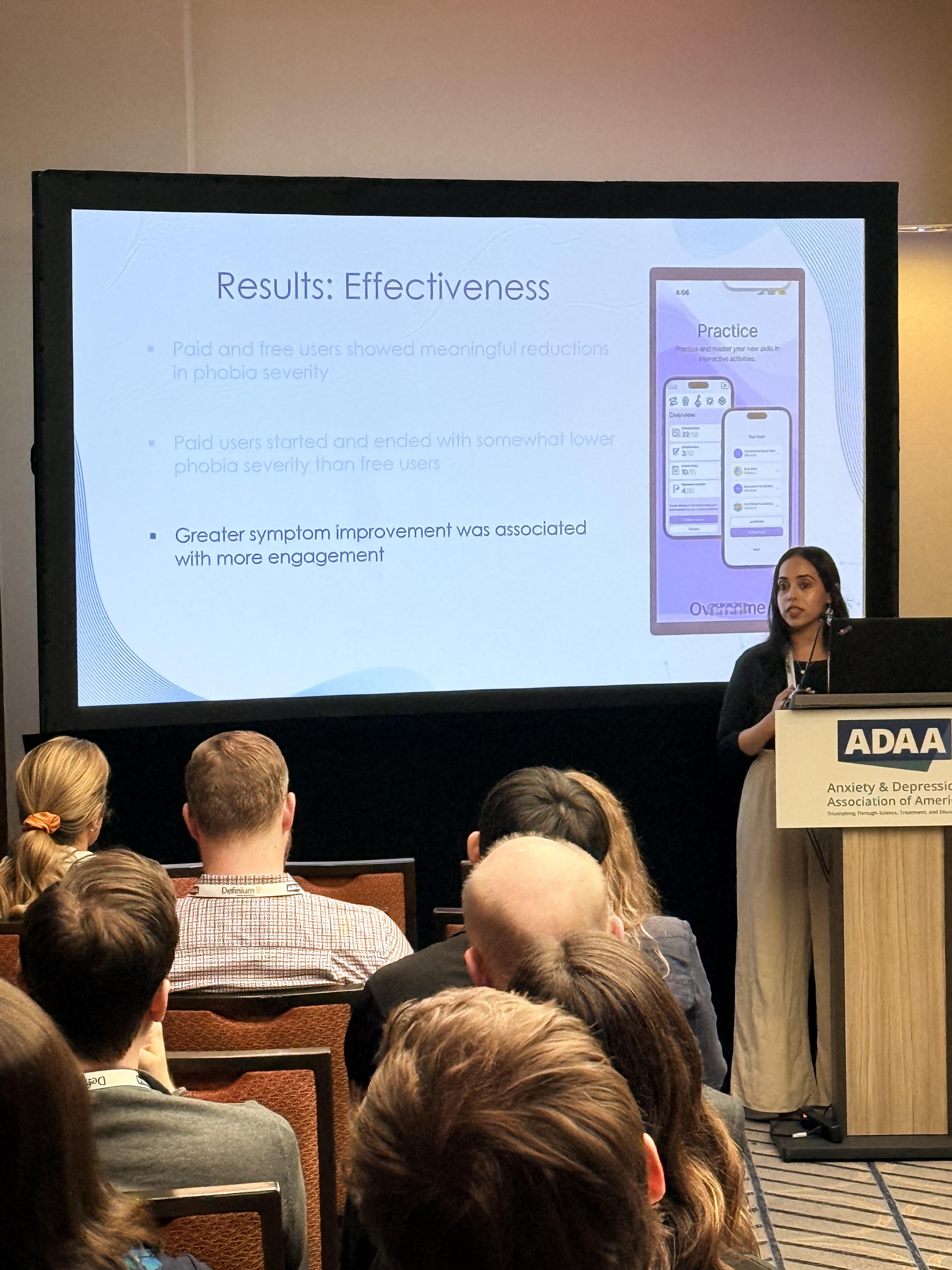
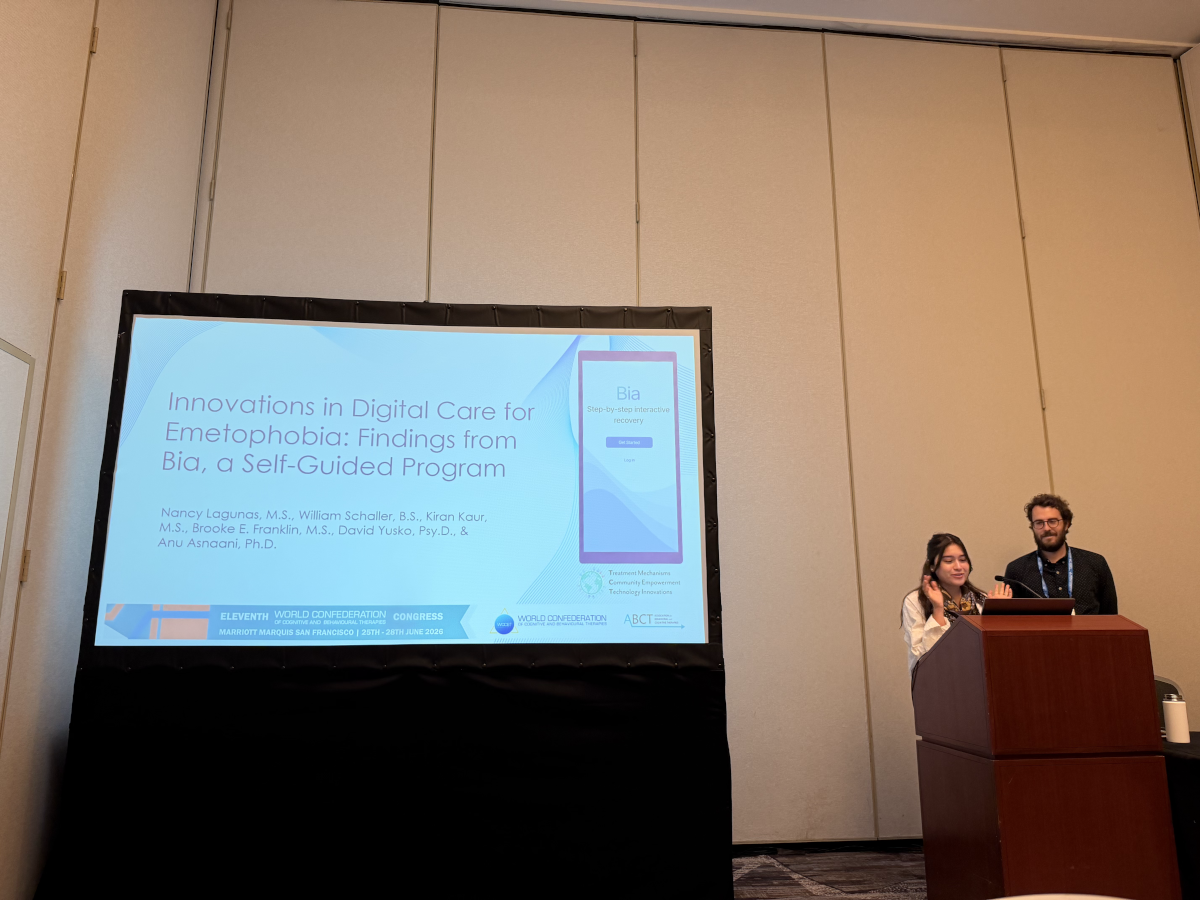
Bia se ha desarrollado en colaboración con investigadores académicos de primer nivel y se presenta en congresos clínicos nacionales.

Universidad de Utah
Logotipo de TEI
ADAA Presentación del Simposio de la ADAA 2026
NASP Presentación de minihabilidades NASP 2026

Flexible Access

Client Pays

Platform is free for you. Clients subscribe via the app store or website.

OR

Provider Pays

You purchase keys and invite clients directly. Volume discounts available.

Free

$0

Assign and monitor exposure homework.

Pre-Made Hierarchies
Customizable, evidence-informed graded hierarchies designed for rapid clinical deployment.
Exercise Library
Thousands of curated text, image, audio, and video exposures organized by clinical theme.
Provider Directory
Listing in our directory viewed by thousands of clients actively seeking ERP specialists.
Assignment & Monitoring
Send structured homework and view progress charts with real-time patient compliance data.
Secure & Compliant
Full HIPAA, COPPA, and GDPR compliance to protect sensitive patient information.
Keys Required
Every client requires a key. They can purchase one directly, or you can purchase access for the client.
Get Started
No credit card required

Organization

Discounted

For practices, schools, and clinics.

Full Feature Access
Includes Live Mode, unlimited custom exercises, and administrative reporting across your team.
Data-Driven Insights
Deep metrics on phobia severity and outcome measures to track organization-wide clinical progress.
Estimate your organizational discount
Estimated monthly cost: $0
Get started Meet with Us →

Bia fits the therapy you already do

You stay the treating clinician. Bia is a tool you configure to fit your method, alongside the therapy you already practice.

How exposure fits in

Exposure is the behavioral laboratory of CBT. It produces the lived evidence needed to disconfirm anxious predictions. Without real-world testing, cognitive restructuring stays abstract. Exposure is what makes the learning stick.

How Bia helps

Bia structures the hierarchy, schedules sessions, and tracks SUDs over time. You set the clinical targets; Bia keeps clients accountable between appointments so your session time goes toward insight, not logistics.

How exposure fits in

In ACT, exposure is a values-aligned action. The goal is not to eliminate discomfort but to practice willingness so that fear stops dictating behavior. Every session is a concrete step toward the life the client is building.

How Bia helps

Bia frames each session in terms of the client's personal "why" and tracks progress across milestones. It reinforces that the work is chosen, not forced, keeping motivation rooted in values rather than symptom elimination.

How exposure fits in

ERP is the gold standard for OCD. It pairs graded exposure with the deliberate choice to refrain from compulsions, demonstrating that anxiety rises, peaks, and passes on its own when the compulsion cycle is interrupted.

How Bia helps

Bia provides dedicated ERP session timers, response-prevention prompts, and session logs. Clients can see their SUD curves flatten over successive trials, which builds confidence to push further up the hierarchy.

How exposure fits in

DBT uses exposure to reduce emotional vulnerability and build distress tolerance. The mindfulness and TIPP skills clients learn in skills training become the foundation that makes exposure safe and regulated rather than overwhelming.

How Bia helps

Bia logs emotional baselines before and after each session, giving clients and providers a clear picture of how distress tolerance is improving over time. That data feeds directly into diary-card conversations.

How exposure fits in

In IFS, protective parts often create avoidance. Gradual exposure is not a confrontation with these parts; it is a negotiated, compassionate invitation for the protective system to relax as the Self demonstrates it can handle the feared situation. Exposure provides the corrective experience that earns the protectors' trust over time.

How Bia helps

Bia's paced, client-controlled sessions match the IFS emphasis on consent and safety. Clients move at a pace their system agrees to, and session logs give you and your client concrete evidence that the protectors' concerns are being taken seriously while the feared outcomes are not materializing.

How exposure fits in

Trauma narration and in-vivo exposure in TF-CBT are highly structured to keep the nervous system within its window of tolerance. The goal is processing, not flooding. Pacing is everything, and the approach is designed to heal without retraumatizing.

How Bia helps

Bia's grounding exercises and paced session design map directly onto TF-CBT's safety requirements. Clients approach feared stimuli in small, calibrated steps with built-in check-ins, keeping the work within the therapeutic window you have established.

How exposure fits in

Schema therapy uses behavioral pattern-breaking to disconfirm long-held core beliefs. Exposure is the corrective emotional experience that shows the client the world is more accessible than their schemas predicted. Repeated success rewrites the schema at an experiential, not just cognitive, level.

How Bia helps

Bia's longitudinal tracking makes schema change visible. Clients see how tasks that were once rated an 8 on distress have become routine. That history of growth is powerful evidence against a schema that says "I cannot cope."

How Bia fits the condition you treat

Pick a condition to see how Bia's structured-exposure approach handles it.

For emetophobia, Bia provides a graduated vomit-related exposure hierarchy (words, then images, then interoceptive nausea induction) you can assign, monitor, and adapt between sessions. Built-in response-prevention tracking gives you visibility into which avoidance and checking behaviors the client is dropping. SMSP-A is captured weekly so you can show measurable severity change at every session.

For agoraphobia, Bia builds the expanding-circles in-vivo exposure plan from wherever the client's safe zone currently sits, with safety-behavior reduction baked into each step. You see the ladder, you adjust step difficulty between sessions, and the client logs distress before, during, and after each exposure. Continuity of care without weekly clinic-only execution.

For panic disorder, Bia structures the interoceptive-exposure ladder (spinning, breath-holding, brief hyperventilation) into daily assignable sessions. Attack frequency and severity are tracked separately so you can see severity drop before frequency follows, the typical clinical pattern. Pair Bia with your between-session check-ins to keep exposure dosing on target.

For social anxiety, Bia structures behavioral experiments and graduated social exposures with safety-behavior tracking (rehearsal, eye contact, scripted phrases) so dropping them becomes visible and measurable. Post-event rumination work and cognitive restructuring exercises are assignable between sessions. The client comes to session with data, not just a narrative.

For contamination OCD, Bia structures the ERP hierarchy with explicit response-prevention windows, ritual-frequency logging, and mental-ritual tracking. The clinical-discipline burden ERP demands is offloaded to the app between sessions; you focus the session on case conceptualization and resistance work. SMSP-A and Y-BOCS-style measures are captured longitudinally.

For school refusal, Bia coordinates the parent, the child, and you around a graduated return-to-school plan. Parent-coaching scripts for the Sunday-night negotiation, morning drop-off support, and partial-day building are assignable between sessions. The underlying anxiety (separation, social, or specific) is identified up front so the program targets the actual driver.

For test and performance anxiety, Bia builds the graduated evaluation-exposure ladder (timed practice tests, practice presentations) alongside cognitive work on perfectionism and catastrophizing. Pre- and post-evaluation distress data is captured automatically so you can target the cognitive work to the specific belief that's driving avoidance.

For separation anxiety, Bia coaches the caregiver through the counterintuitive script (brief, calm, predictable goodbyes) and structures the graduated separation ladder. Caregiver adherence, child distress trajectories, and tolerated-separation duration are tracked between sessions. You spend session time on conceptualization and parenting work, not on logistics.

For fear of flying, Bia delivers the three-part program (flight-safety education, interoceptive exposure to motion sensations, graduated airport and aircraft exposures) on an accelerated timeline tied to the client's actual flight date. Pre-flight, in-flight, and post-flight distress logging gives you clean data for the next exposure-planning conversation.

For specific phobias outside our standard programs, the Bia exposure engine adapts to the trigger you and the client define together. You build the hierarchy, assign the steps, monitor distress, and adjust between sessions. The same clinical engine that powers our emetophobia and panic programs handles any specific phobia at the same level of structure.

Preguntas frecuentes

Sí. Bia cumple con la HIPAA.
Sí. Puedes revisar nuestro Acuerdo de Asociación Comercial y debes aceptarlo durante el proceso de creación de la cuenta.
Los clientes utilizan Bia para completar sesiones guiadas de exposición, donde leen texto, ven imágenes, ven videos, juegan, responden preguntas y más. Como proveedor, puedes ver el progreso de tus clientes, asignar actividades de exposición personalizadas y compartir notas. La biblioteca de exposición seleccionada y el entorno controlado de Bia facilitan que los clientes comiencen y continúen con el ERP.
Guided exposure automatically adjusts the flow of a session based on SUD (subjective units of distress) scores in real time. It enforces clinical best practices to ensure each session is safe, tolerable, and effective.
No. You remain the treating clinician of record. Providers assign exercises, build and edit hierarchies, set SUD thresholds, and review session data. Bia paces sessions within the parameters you set and surfaces signals for your review. Any step or decision can be overridden by the provider.
Bia does not write directly into EHR systems. Session summaries, progress reports, and assessment scores (SMSP-A, PHQ-9, YBOCS, and more) are formatted to copy and paste into your clinical notes, or exported as PDF for upload to the EHR or attachment to insurance claims.
Account creation is free and takes a couple of minutes. Every new provider account ships with a pre-loaded demo client so you can explore the dashboard, preview hierarchies, and run a guided exposure session end to end before inviting a single real client. No card required to start.
Bia nunca comparte tus datos con terceros. Puedes ver y borrar tus datos en cualquier momento. Una buena privacidad es sencilla: tus datos te pertenecen.
No

Ready to grow your exposure therapy practice?

Join providers using Bia to attract high-intent clients, deliver structured treatment, and easily bill what you deserve.

Create free account Sign in

Data Notes

  1. [1] Session count based on cumulative exposure sessions logged across all Bia users since launch. Updated periodically.
  2. [2] Average SMSP-A severity change measured across Bia users who completed a minimum of 8 weeks on the platform. Self-reported via standardized in-app assessments.
  3. [3] RTM revenue estimate based on CMS reimbursement rates for CPT codes 98975, 98976, and 98977. Actual reimbursement varies by payer, plan, and provider billing arrangement. RTM access by invitation.