Bia - Bia - Accesso del fornitore
Ha già un account? Accedi


Per i terapeuti


Per i clienti

Portale operatori


Per i terapeuti


Per i clienti

The exposure therapy platform that brings you clients.

Exposure therapy made easy with pre-built hierarchies, curated content, and clients that come to you.

Clients come to you while you are still building the practice.

Bia routes high-intent clients who are already exposure-curious to your directory. Even early in your specialty, the first session is therapeutic from minute one.

  • Free directory listing visible to thousands of weekly Bia visitors. Bonus badge after you have supported 3+ Bia clients.
  • Clients arrive having explored exposure work themselves, so first sessions are clinical, not introductory.
  • Coverage across phobias, OCD, social anxiety, and panic, for kids and adults.
  • Every intake waits for your review. Accept the clients that fit, on your timeline.

Fill a specialty practice without marketing it.

Exposure-ready clients find you through Bia. Their first appointment goes to clinical formulation, not psychoeducation on what exposure therapy is.

  • Free directory listing visible to thousands of weekly Bia visitors. Bonus badge after you have supported 3+ Bia clients.
  • Clients arrive having explored exposure work themselves, so first sessions are clinical, not introductory.
  • Coverage across phobias, OCD, social anxiety, and panic, for kids and adults.
  • Every intake waits for your review. Accept the clients that fit, on your timeline.

Run effective exposure without building hierarchies from scratch.

Validated content, pre-built hierarchies, and guided sessions that adapt to client distress in real time. Confident exposure on day one.

  • You set the hierarchy and parameters. Bia operates within them, you remain the treating clinician of record.
  • 1,000+ exposure exercises curated by psychologists, organized by condition.
  • Pre-built hierarchies for emetophobia, OCD, social anxiety, panic, and more.
  • Sessions auto-adjust pacing based on real-time SUD scoring.
  • Works alongside CBT, ACT, IFS. No forced workflow change.

Skip the prep. Spend session time on the therapy.

A library and hierarchy engine that saves the hours you spend assembling content. Use what fits, edit anything, build custom in minutes.

  • You set the hierarchy and parameters. Bia operates within them, you remain the treating clinician of record.
  • 1,000+ exposure exercises curated by psychologists, organized by condition.
  • Pre-built hierarchies as starting points, fully editable to your case formulation.
  • Real-time SUD pacing as a clinical assist, never a constraint.
  • Build and save custom exposures from the portal in minutes.

Clients return having actually done the homework.

Between-session work that tracks itself, plus adaptive pacing that prevents the over-exposure that scares clients out of treatment.

  • You set the thresholds and pacing rules. Bia operates within them, you remain the treating clinician of record.
  • Adaptive SUD pacing keeps every session in the window of tolerance.
  • Homework completion tracks automatically. No more "did you do your exposures?"
  • Hierarchies sequence easy-to-hard, so confidence builds before challenge.
  • SMSP-A, PHQ-9, and YBOCS curves give clients visible proof the work is paying off.

Keep clients in treatment past the difficult middle.

Adaptive pacing and between-session tracking attack the two biggest dropout drivers: over-exposure and homework non-adherence.

  • You set the thresholds and pacing rules. Bia operates within them, you remain the treating clinician of record.
  • Adaptive SUD pacing keeps every session in the window of tolerance.
  • Homework completion tracks automatically. No more "did you do your exposures?"
  • Hierarchies adjustable mid-treatment as the formulation evolves.
  • SMSP-A, PHQ-9, and YBOCS curves give clients visible proof the work is paying off.

Bill an extra $150/month per client. Without doing extra work.

Bia logs every session detail your billing pipeline needs for RTM. CPT 98975, 98976, and 98977, documented as you treat.

  • RTM reports generated automatically for CPT 98975 / 98976 / 98977.
  • Complete, timestamped audit trail for every session and client.
  • Insurance-ready PDF reports, paste into clinical notes or attach to your claim.
  • RTM access by invitation. Contact us to request.

Earn the reimbursement your specialty already deserves.

Specialist exposure qualifies for RTM billing. Bia produces the documentation as a byproduct of treatment, so the revenue is not gated on more paperwork.

  • RTM reports generated automatically for CPT 98975 / 98976 / 98977.
  • Complete, timestamped audit trail for every session and client.
  • Insurance-ready PDF reports, paste into clinical notes or attach to your claim.
  • RTM access by invitation. Contact us to request.
Crea il tuo account terapeuta
You remain the treating clinician of record.
Free to start. Provider plan from $29.99/mo. See full pricing
HIPAA compliant BAA included Try for free

How Bia connects clients to your practice

No cold-outbound, no marketing spend. Clients arrive in Bia for self-guided exposure, and the ones who want professional support find their way to your profile.

  1. 1

    They start self-guided

    Bia's patient app is a free, structured starting point for exposure. Clients build a hierarchy, run sessions on their own, and track their SUD curves before they ever talk to a therapist.

  2. 2

    They look for a clinician

    When self-guided isn't enough, the app routes them to the directory and filters profiles to licensed clinicians in their state who treat their condition. They already understand what exposure is and what they need help with.

  3. 3

    They book a call with you

    From your profile, they request an intake call in one tap. It lands in your dashboard as a new intake for you to accept, decline, or follow up on, on your own timeline.

Partner e conferenze

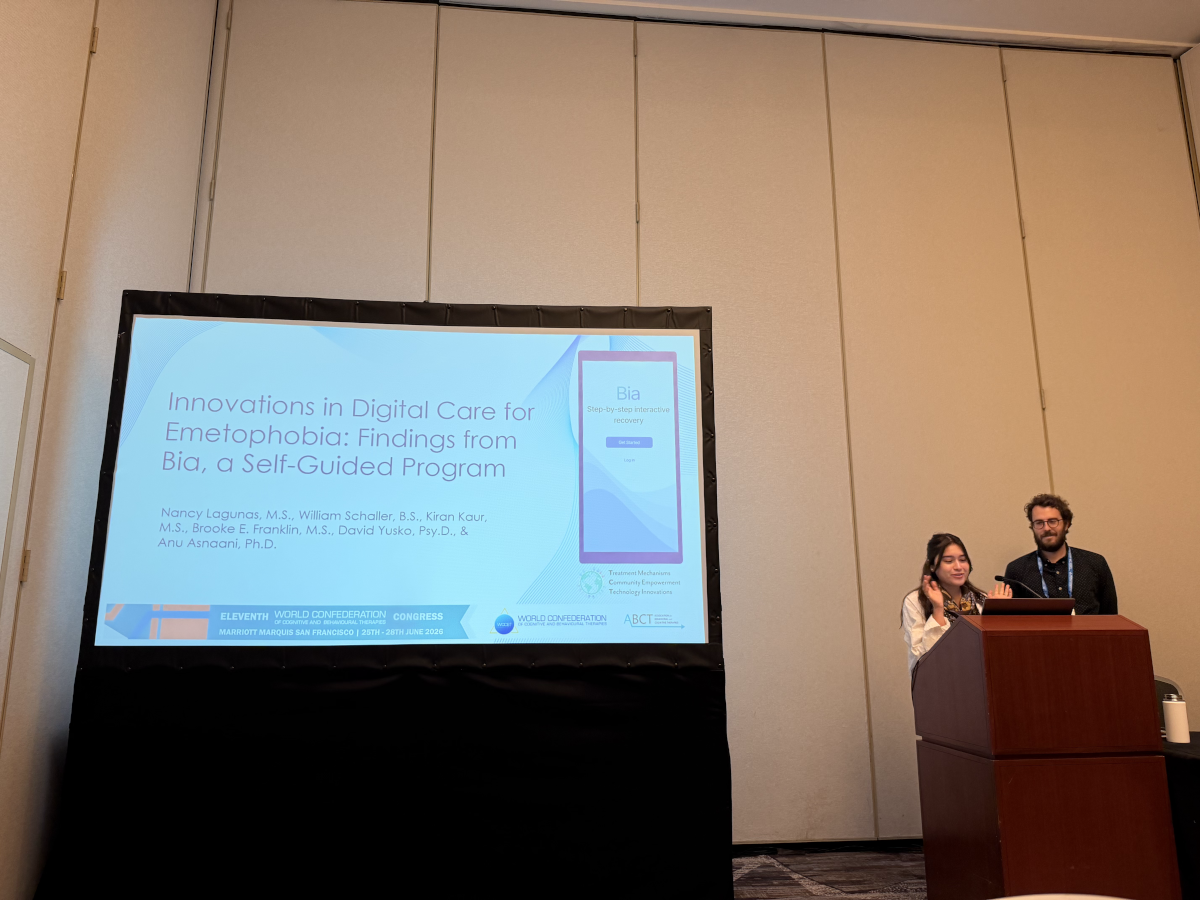
Bia è stato sviluppato in collaborazione con i principali ricercatori accademici ed è presente alle conferenze cliniche nazionali.

Università dello Utah
Logo TEI
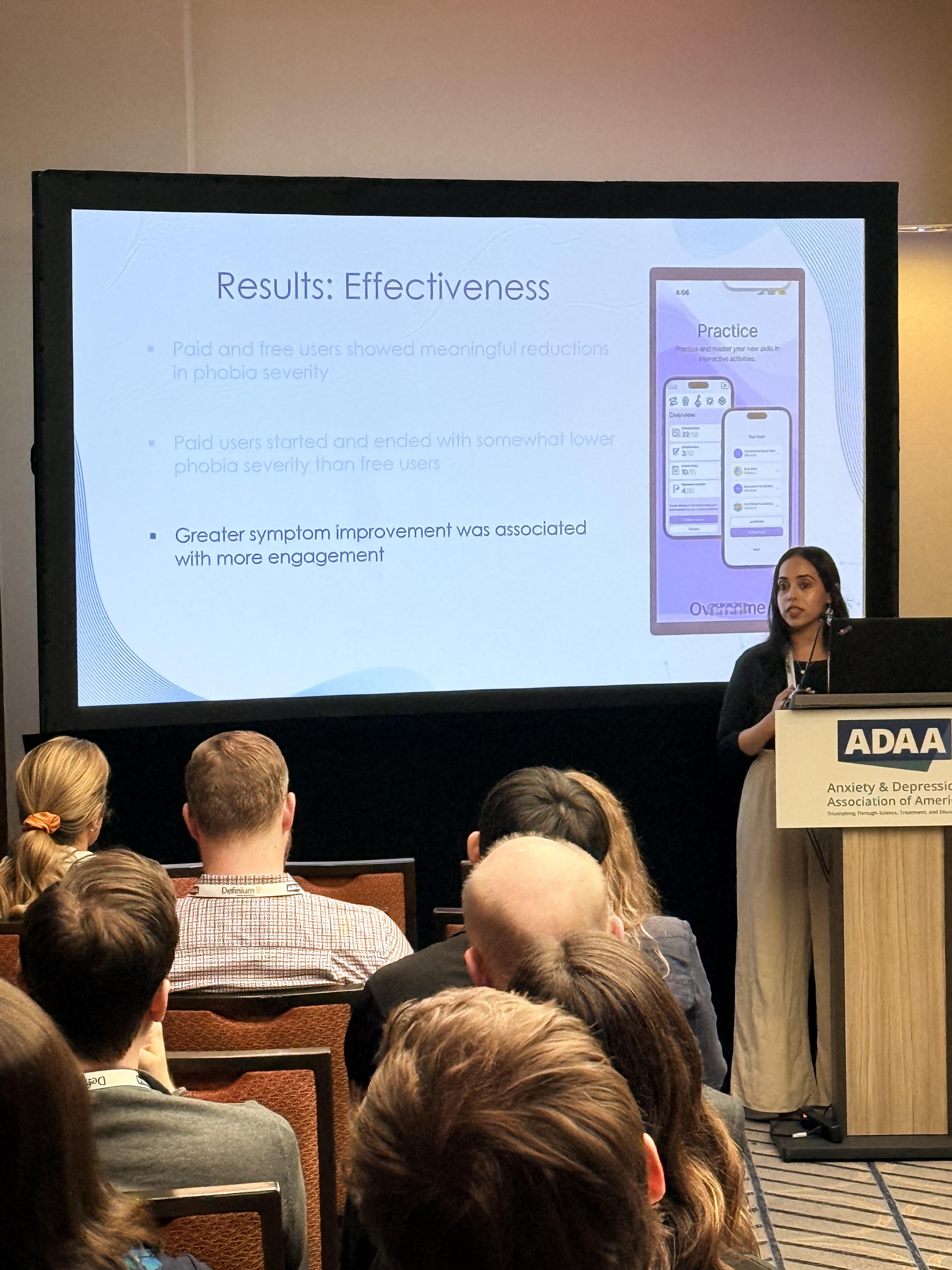
ADAA Presentazione al Simposio ADAA 2026
NASP Presentazione delle miniskills al NASP 2026

Flexible Access

Client Pays

Platform is free for you. Clients subscribe via the app store or website.

OR

Provider Pays

You purchase keys and invite clients directly. Volume discounts available.

Free

$0

Assign and monitor exposure homework.

Pre-Made Hierarchies
Customizable, evidence-informed graded hierarchies designed for rapid clinical deployment.
Exercise Library
Thousands of curated text, image, audio, and video exposures organized by clinical theme.
Provider Directory
Listing in our directory viewed by thousands of clients actively seeking ERP specialists.
Assignment & Monitoring
Send structured homework and view progress charts with real-time patient compliance data.
Secure & Compliant
Full HIPAA, COPPA, and GDPR compliance to protect sensitive patient information.
Keys Required
Every client requires a key. They can purchase one directly, or you can purchase access for the client.
Get Started
No credit card required

Organization

Discounted

For practices, schools, and clinics.

Full Feature Access
Includes Live Mode, unlimited custom exercises, and administrative reporting across your team.
Data-Driven Insights
Deep metrics on phobia severity and outcome measures to track organization-wide clinical progress.
Estimate your organizational discount
Estimated monthly cost: $0
Get started Meet with Us →

Bia fits the therapy you already do

You stay the treating clinician. Bia is a tool you configure to fit your method, alongside the therapy you already practice.

How exposure fits in

Exposure is the behavioral laboratory of CBT. It produces the lived evidence needed to disconfirm anxious predictions. Without real-world testing, cognitive restructuring stays abstract. Exposure is what makes the learning stick.

How Bia helps

Bia structures the hierarchy, schedules sessions, and tracks SUDs over time. You set the clinical targets; Bia keeps clients accountable between appointments so your session time goes toward insight, not logistics.

How exposure fits in

In ACT, exposure is a values-aligned action. The goal is not to eliminate discomfort but to practice willingness so that fear stops dictating behavior. Every session is a concrete step toward the life the client is building.

How Bia helps

Bia frames each session in terms of the client's personal "why" and tracks progress across milestones. It reinforces that the work is chosen, not forced, keeping motivation rooted in values rather than symptom elimination.

How exposure fits in

ERP is the gold standard for OCD. It pairs graded exposure with the deliberate choice to refrain from compulsions, demonstrating that anxiety rises, peaks, and passes on its own when the compulsion cycle is interrupted.

How Bia helps

Bia provides dedicated ERP session timers, response-prevention prompts, and session logs. Clients can see their SUD curves flatten over successive trials, which builds confidence to push further up the hierarchy.

How exposure fits in

DBT uses exposure to reduce emotional vulnerability and build distress tolerance. The mindfulness and TIPP skills clients learn in skills training become the foundation that makes exposure safe and regulated rather than overwhelming.

How Bia helps

Bia logs emotional baselines before and after each session, giving clients and providers a clear picture of how distress tolerance is improving over time. That data feeds directly into diary-card conversations.

How exposure fits in

In IFS, protective parts often create avoidance. Gradual exposure is not a confrontation with these parts; it is a negotiated, compassionate invitation for the protective system to relax as the Self demonstrates it can handle the feared situation. Exposure provides the corrective experience that earns the protectors' trust over time.

How Bia helps

Bia's paced, client-controlled sessions match the IFS emphasis on consent and safety. Clients move at a pace their system agrees to, and session logs give you and your client concrete evidence that the protectors' concerns are being taken seriously while the feared outcomes are not materializing.

How exposure fits in

Trauma narration and in-vivo exposure in TF-CBT are highly structured to keep the nervous system within its window of tolerance. The goal is processing, not flooding. Pacing is everything, and the approach is designed to heal without retraumatizing.

How Bia helps

Bia's grounding exercises and paced session design map directly onto TF-CBT's safety requirements. Clients approach feared stimuli in small, calibrated steps with built-in check-ins, keeping the work within the therapeutic window you have established.

How exposure fits in

Schema therapy uses behavioral pattern-breaking to disconfirm long-held core beliefs. Exposure is the corrective emotional experience that shows the client the world is more accessible than their schemas predicted. Repeated success rewrites the schema at an experiential, not just cognitive, level.

How Bia helps

Bia's longitudinal tracking makes schema change visible. Clients see how tasks that were once rated an 8 on distress have become routine. That history of growth is powerful evidence against a schema that says "I cannot cope."

How Bia fits the condition you treat

Pick a condition to see how Bia's structured-exposure approach handles it.

Per l'emetofobia, Bia fornisce una gerarchia graduale di esposizione al vomito (parole, poi immagini, poi induzione di nausea interocettiva) che puoi assegnare, monitorare e adattare tra una sessione e l'altra. Il monitoraggio integrato della prevenzione della risposta ti offre visibilità su quali comportamenti di evitamento e di controllo il cliente sta abbandonando. L'SMSP-A viene registrato settimanalmente, così puoi mostrare un cambiamento misurabile della gravità ad ogni sessione.

Per l'agorafobia, Bia costruisce il piano di esposizione in vivo a cerchi espandenti partendo dalla zona di sicurezza attuale del cliente, con una riduzione del comportamento di sicurezza integrata in ogni fase. Vedi la scala, regoli la difficoltà dei passi tra una sessione e l'altra, e il cliente registra il disagio prima, durante e dopo ogni esposizione. Continuità di cura senza dover andare in clinica ogni settimana.

Per il disturbo di panico, Bia struttura la scala di esposizione interocettiva (giro su se stessi, trattenere il respiro, breve iperventilazione) in sessioni assegnabili quotidianamente. La frequenza e la gravità degli attacchi vengono monitorate separatamente, così puoi vedere la gravità diminuire prima che la frequenza segua, il tipico andamento clinico. Abbina Bia ai tuoi controlli tra una sessione e l'altra per mantenere il dosaggio dell'esposizione in linea con l'obiettivo.

Per l'ansia sociale, Bia struttura esperimenti comportamentali ed esposizioni sociali graduali con monitoraggio dei comportamenti di sicurezza (prova, contatto visivo, frasi prestabilite) in modo che il loro abbandono diventi visibile e misurabile. Il lavoro di ruminazione post-evento e gli esercizi di ristrutturazione cognitiva sono assegnabili tra una sessione e l'altra. Il cliente arriva alla sessione con dei dati, non solo con un racconto.

Per il DOC da contaminazione, Bia struttura la gerarchia ERP con finestre esplicite di prevenzione della risposta, registrazione della frequenza dei rituali e monitoraggio dei rituali mentali. Il carico clinico-disciplinare richiesto dall'ERP viene scaricato sull'app tra una sessione e l'altra; tu concentri la sessione sulla concettualizzazione del caso e sul lavoro sulla resistenza. Le misure in stile SMSP-A e Y-BOCS vengono registrate longitudinalmente.

Per il rifiuto scolastico, Bia coordina il genitore, il bambino e te attorno a un piano graduale di ritorno a scuola. Tra una sessione e l'altra è possibile assegnare script di coaching genitoriale per la negoziazione della domenica sera, il supporto all'accompagnamento mattutino e la costruzione di giornate parziali. L'ansia di fondo (da separazione, sociale o specifica) viene identificata fin dall'inizio, in modo che il programma miri alla causa reale.

Per l'ansia da esame e da prestazione, Bia costruisce una scala graduale di valutazione ed esposizione (test di prova a tempo, presentazioni di prova) insieme a un lavoro cognitivo sul perfezionismo e sul catastrofismo. I dati relativi al disagio pre e post valutazione vengono raccolti automaticamente, così puoi indirizzare il lavoro cognitivo verso la specifica convinzione che sta guidando l'evitamento.

Per l'ansia da separazione, Bia guida il caregiver attraverso lo script controintuitivo (addii brevi, calmi e prevedibili) e struttura la scala di separazione graduale. L'aderenza del caregiver, le traiettorie di disagio del bambino e la durata della separazione tollerata vengono monitorate tra una sessione e l'altra. Dedichi il tempo della sessione alla concettualizzazione e al lavoro genitoriale, non alla logistica.

Per la paura di volare, Bia offre il programma in tre parti (educazione alla sicurezza in volo, esposizione interocettiva alle sensazioni di movimento, esposizioni graduali in aeroporto e a bordo dell'aereo) con un calendario accelerato legato alla data effettiva del volo del cliente. La registrazione del disagio pre-volo, in volo e post-volo ti fornisce dati chiari per la prossima conversazione sulla pianificazione dell'esposizione.

Per le fobie specifiche che non rientrano nei nostri programmi standard, il motore di esposizione Bia si adatta al trigger che tu e il cliente definite insieme. Sei tu a costruire la gerarchia, assegnare i passaggi, monitorare il disagio e apportare modifiche tra una sessione e l'altra. Lo stesso motore clinico che alimenta i nostri programmi per l'emetofobia e il panico gestisce qualsiasi fobia specifica con lo stesso livello di struttura.

Domande frequenti

Sì. Bia è conforme alla normativa HIPAA.
Sì. Puoi esaminare il nostro Contratto di Associazione Aziendale e sei tenuto a accettarlo durante il processo di creazione dell'account.
I clienti utilizzano Bia per completare sessioni guidate di esposizione, dove leggono testi, visualizzano immagini, guardano video, giocano, rispondono a domande e altro ancora. Come fornitore, puoi visualizzare i progressi dei tuoi clienti, assegnare attività di esposizione personalizzate e condividere note. La libreria di esposizione selezionata e l'ambiente controllato di Bia rendono più facile per i clienti iniziare e seguire l'ERP.
Guided exposure automatically adjusts the flow of a session based on SUD (subjective units of distress) scores in real time. It enforces clinical best practices to ensure each session is safe, tolerable, and effective.
No. You remain the treating clinician of record. Providers assign exercises, build and edit hierarchies, set SUD thresholds, and review session data. Bia paces sessions within the parameters you set and surfaces signals for your review. Any step or decision can be overridden by the provider.
Bia does not write directly into EHR systems. Session summaries, progress reports, and assessment scores (SMSP-A, PHQ-9, YBOCS, and more) are formatted to copy and paste into your clinical notes, or exported as PDF for upload to the EHR or attachment to insurance claims.
Account creation is free and takes a couple of minutes. Every new provider account ships with a pre-loaded demo client so you can explore the dashboard, preview hierarchies, and run a guided exposure session end to end before inviting a single real client. No card required to start.
Bia non condivide mai i tuoi dati con terze parti. Puoi visualizzare ed eliminare i tuoi dati in qualsiasi momento. Una buona privacy è semplice: i tuoi dati appartengono a te.
No

Ready to grow your exposure therapy practice?

Join providers using Bia to attract high-intent clients, deliver structured treatment, and easily bill what you deserve.

Create free account Sign in

Data Notes

  1. [1] Session count based on cumulative exposure sessions logged across all Bia users since launch. Updated periodically.
  2. [2] Average SMSP-A severity change measured across Bia users who completed a minimum of 8 weeks on the platform. Self-reported via standardized in-app assessments.
  3. [3] RTM revenue estimate based on CMS reimbursement rates for CPT codes 98975, 98976, and 98977. Actual reimbursement varies by payer, plan, and provider billing arrangement. RTM access by invitation.